



18 января 2026

SLANG: FOR OR AGAINST? СЛЕНГ: ЗА ИЛИ ПРОТИВ?
Заключительная встреча 2025 года в нашем Английском Разговорном Клубе состоялась 20 декабря и была посвящена не менее интересной и дискуссионной теме «Американский, Британский и Австралийский Сленг».
«Сленг – язык-бродяга, который слоняется
в окрестностях литературной речи
и постоянно старается пробить cебе дорогу
в самое изысканное общество»
Дж.Б.Гриноу и Дж.Л.Киттридж
“Slang – very informal words and expressions that are more common in spoken language, especially used by a particular group of people, for example, children, criminals, soldiers, etc.” (Oxford Advanced Learner’s Dictionary, the 8th edition).
The attitude to slang can be different depending on the audience and the context, the goals and objectives of its use. On the one hand, slang can be helpful in communication with others who share similar interests and experiences, allowing you to sound more natural and approachable. It can also add a sense of humour and playfulness to your speech, making it more engaging and entertaining for those around you. However, on the other hand, some people can find the use of slang unprofessional and disrespectful, inappropriate and offensive in certain contexts. It can lead to confusion and miscommunication.
Nowadays many learners prefer listening to podcasts, watching films, series, television shows in the original versions, believing they are the best ways to improve and master a foreign language. Modern slang words and phrases are often used by characters for quick casual conversations to express their feelings and emotions more effectively. Sometimes it seems as if they are speaking some strange foreign language and you feel that you miss the full meaning of what they are saying.
Slang can be hard to follow… Here are a few crucial tips how to learn and use slang naturally:
- Check meanings using dictionaries: you can hear some words or expressions several times in similar situations without catching the meaning. Just look them up in online dictionaries, to be sure.
- Listen and observe: keep an eye on how native speakers use slang in their conversations (podcasts, shows, series…). Watch some videos that can give the explanation of these tricky words.
- Get familiar with the context: before using slang, make sure you understand the given situation and the people you are talking to. Slang words are appropriate in informal settings, so it is necessary to evaluate the environment before using them.
You do not need to use slang all the time, but knowing its meaning can help you enjoy English more – laugh with others without feeling confused or pretending you have got it.
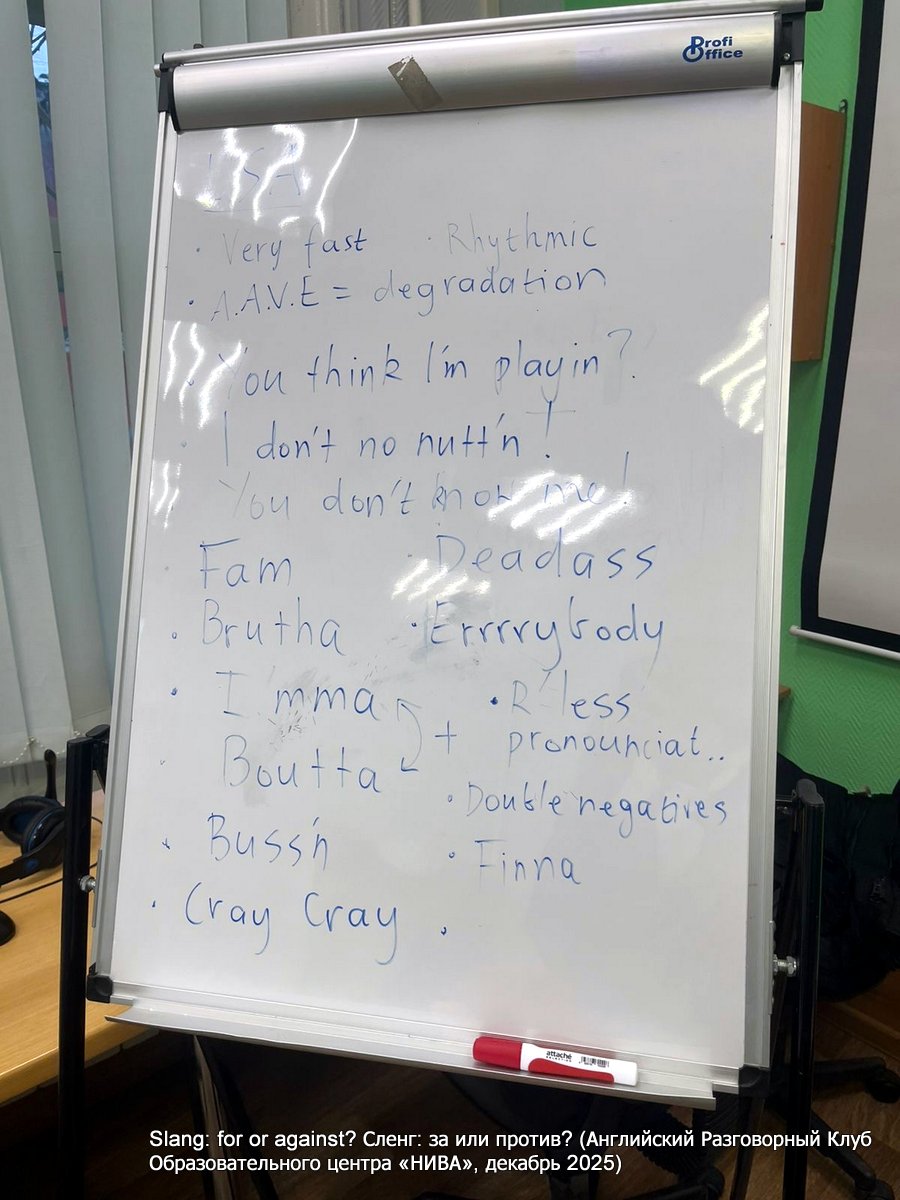
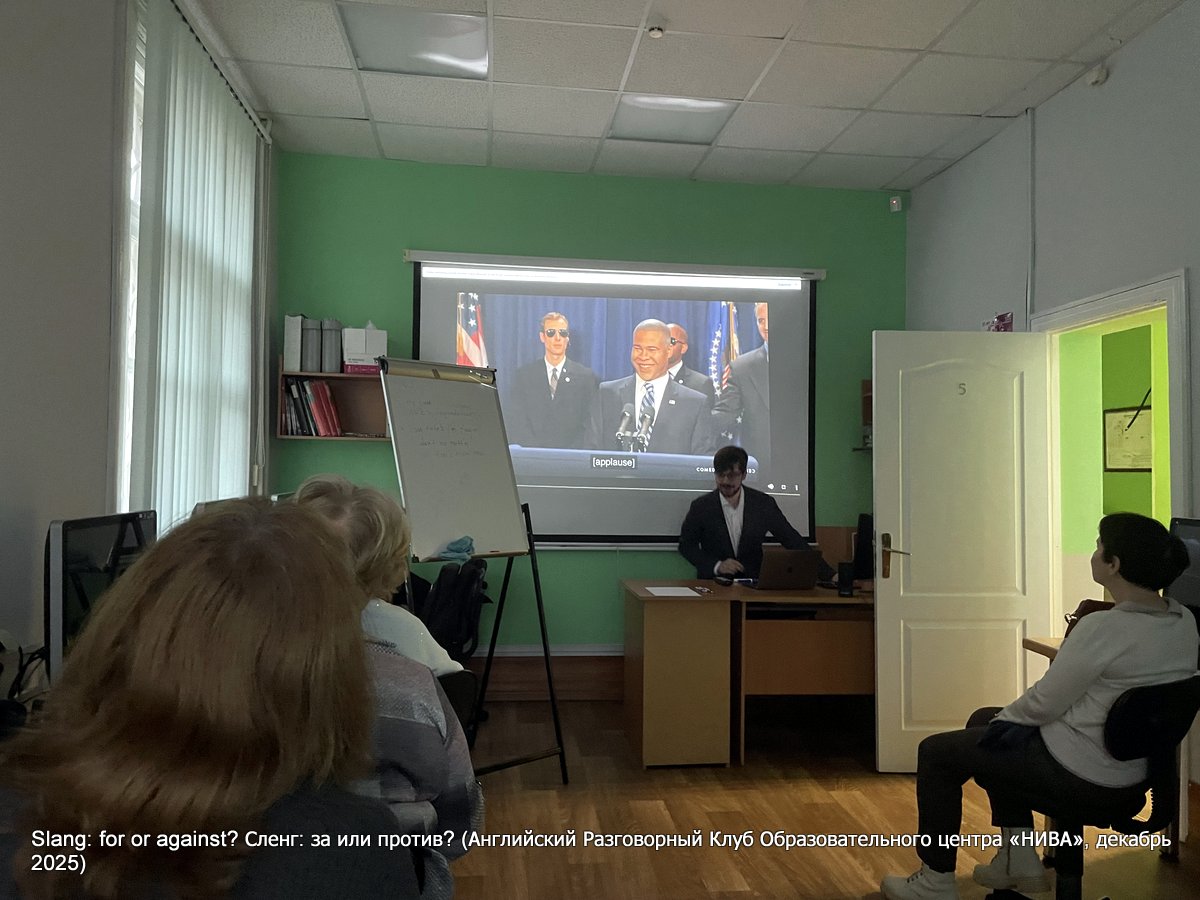
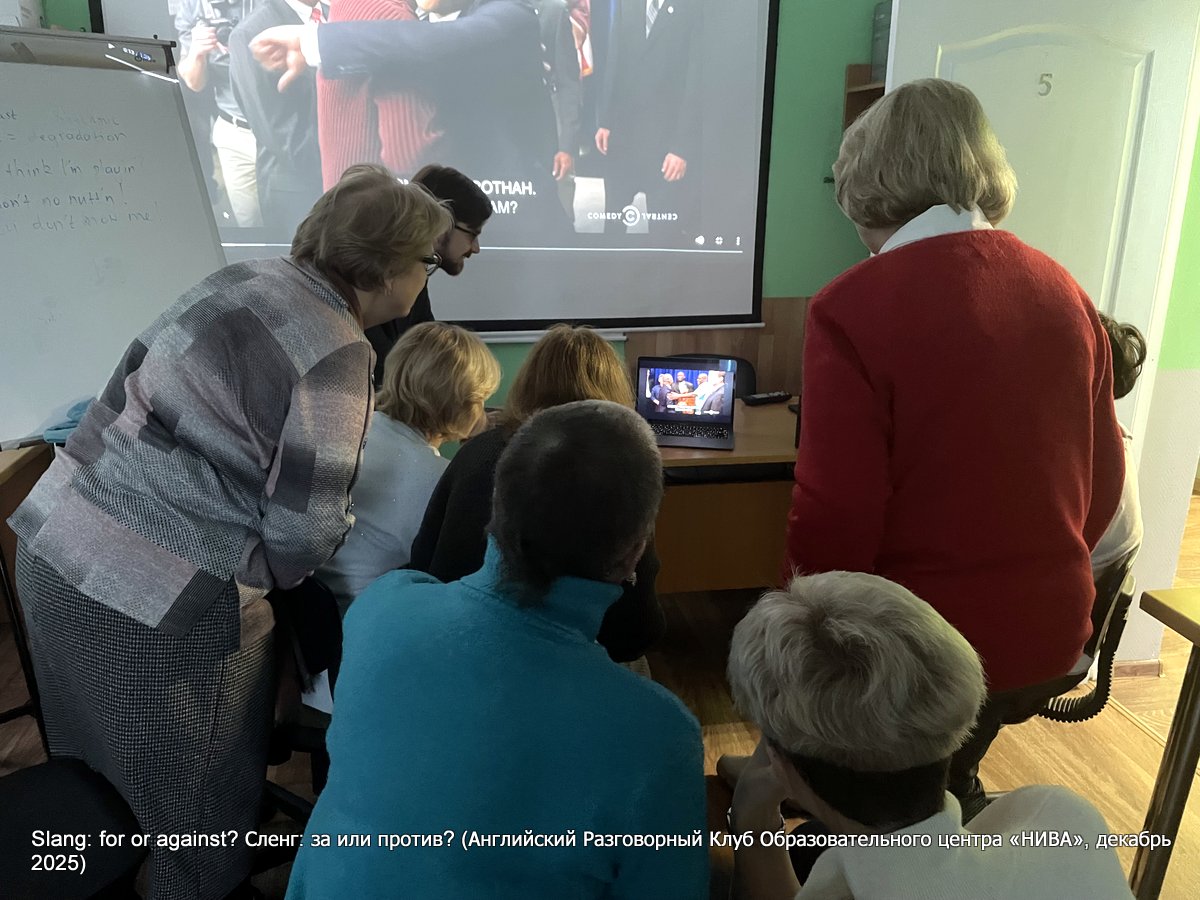
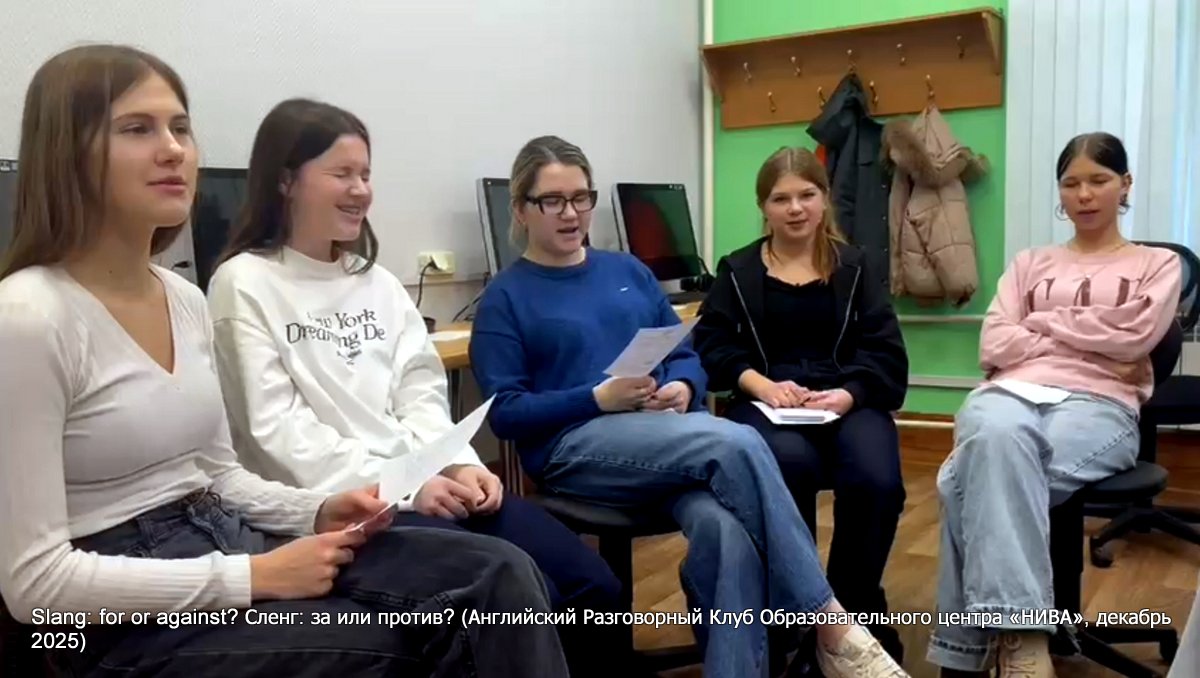
At our December session Fyodor highlighted the peculiarities of American, British and Australian Slang. We watched videos, put down and practised some frequently used slang words and phrases in short dialogues. It was so unusual to speak “wrong” English making grammar mistakes on purpose! As for pronunciation and intonation, it was really exciting and fun!
We invite English learners to join our English Speaking Club! If you want to sound natural and fluent, find out interesting facts about the English language and English-speaking countries, participate in discussions and debate on hottest and burning topics… you’re welcome!
Maria Sheludyakova
P.S. to be continued…

|
|
|
|

|
|

|